1. Introduction
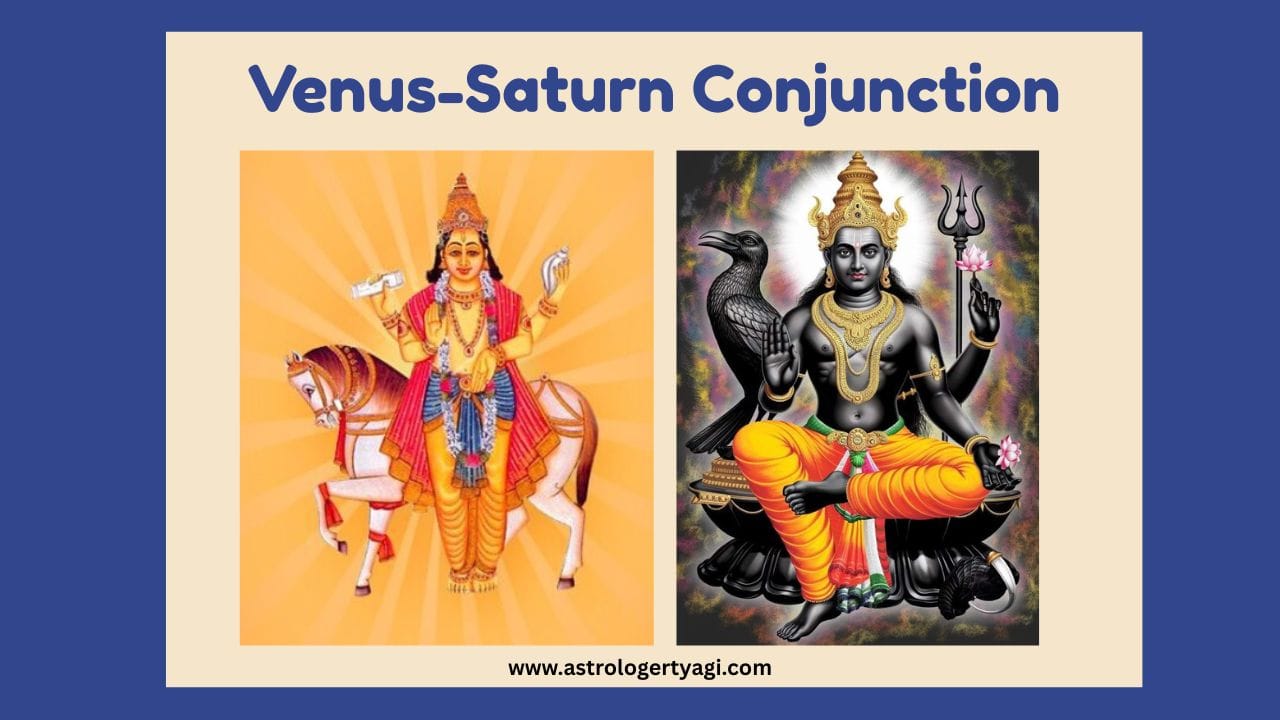
In the cosmic cabinet of Vedic Astrology, the meeting of Venus-Saturn Conjunction is a fascinating study in contrasts. It is the convergence of the Lover (Venus) and the Taskmaster (Saturn). While Venus seeks pleasure, comfort, and connection, Saturn demands discipline, reality, and solitude. At first glance, this seems like a restrictive combination, often feared as a killer of romance. However, in reality, this is one of the most profound combinations for creating enduring legacies.
This conjunction transforms the fleeting nature of Venusian love into the “till death do us part” commitment of Saturn. It turns artistic whimsy into architectural mastery. It changes frivolous spending into empire-building wealth. While it denies the “fluff” of romance and the ease of early success, it promises something far more valuable: a love that stands the test of time and success built on an unshakeable foundation.
2. Understanding Venus (Shukra) in Astrology
Venus, or Shukra, is the planet of refinement, relating, and valuing. It represents the softer side of life—the ability to enjoy, to love, and to create harmony.
Core Significations of Venus:
Love and Relationships: It governs romance, marriage, and our capacity for intimacy. It represents the wife in a man’s chart.
Wealth and Luxury: Venus rules liquid cash, jewelry, vehicles, and material comforts. It is the karaka for earthly happiness.
Art and Beauty: It is the muse behind music, painting, dance, cinema, and fashion. It represents aesthetic sense and taste.
Pleasure and Comfort: It governs the senses and the enjoyment of life’s pleasures, including good food and sexuality.
Diplomacy: Venus creates harmony, compromise, and social grace.
When Venus is free, it loves spontaneously. When it meets Saturn, it learns to love responsibly.
3. Understanding Saturn (Shani) in Astrology
Saturn, or Shani, is the Great Judge. He is the force of gravity in the chart that keeps us grounded. He represents the boundaries of reality that we must accept to mature.
Core Significations of Saturn:
Time and Delay: Saturn moves slowly, representing the passage of time, longevity, and patience.
Discipline and Structure: It governs order, hierarchy, rules, and the structure of society. It represents the value of hard work.
Restriction and Limitation: Saturn restricts to teach focus. It says “no” now so you can appreciate the “yes” later.
Karma and Justice: It delivers the consequences of past actions, ensuring the cosmic ledger is balanced.
Fear and Insecurity: It represents our deepest fears and the areas where we feel inadequate, forcing us to build strength.
Saturn is not the enemy of Venus; in Vedic astrology, they are actually Natural Friends (Mitra). Saturn provides the structure that Venus needs to create something lasting.
4. The Venus and Saturn Conjunction: The Core Dynamics
When the planet of pleasure meets the planet of duty, the result is “Serious Love” and “Disciplined Art.”
The core dynamic is suppression followed by structured expression. Initially, Saturn suppresses Venus. The person may feel unloved, unattractive, or socially awkward in their youth. They may feel that love is a burden or a responsibility rather than a joy. This creates a deep-seated fear of rejection.
However, as the person matures (typically after age 30), this dynamic shifts. The suppression turns into discipline. The person stops looking for validation outside and builds a solid sense of self-worth. They approach relationships with immense loyalty and seriousness. They approach their finances with prudence. They approach art with technical mastery. The “party” energy of Venus is replaced by the “legacy” energy of Saturn.
The Closeness Factor: Degrees and Orb of Conjunction
Exact Conjunction (0-3 degrees): The fusion is intense. The person is likely very hard on themselves regarding their appearance and relationships. They possess a “monastic” view of love—extremely loyal but perhaps emotionally dry.
Close Conjunction (3-10 degrees): The standard “Dharma” yoga. The person is dutiful in relationships and possesses strong artistic or structural talents. The influence is clear but manageable.
Wide Conjunction (over 10 degrees): The planets operate somewhat independently. The person may have a serious approach to relationships, but the heavy restriction of Saturn is lifted, allowing for more spontaneity.
5. Positive Effects of Venus and Saturn Conjunction
When this combination is well-placed (e.g., in Libra, Capricorn, Aquarius), it produces citizens of great substance.
Unwavering Loyalty: This is the signature of the committed partner. They do not take vows lightly. Once they commit, they stick through “sickness and health.”
Accumulation of Wealth: Saturn curbs Venus’s spending habits. These individuals are frugal, smart investors who build significant wealth over the long term. They are the “millionaire next door.”
Artistic Mastery: Venus gives the vision, Saturn gives the technique. This creates architects, sculptors, classical musicians, and designers who are masters of form and structure.
Professional Success: Venus rules relationships and Saturn rules career. This gives the ability to build long-lasting professional networks. It is excellent for careers in law, diplomacy, and corporate hierarchy.
Dutiful Nature: They are responsible family members who take care of their aging parents and fulfill their societal obligations with grace.
6. Negative Effects of Venus and Saturn Conjunction
If afflicted or poorly understood, this energy can feel like a heavy weight on the heart.
Delay and Denial in Love: The most common effect is a delay in marriage or a lack of romantic opportunities in youth. It can create a feeling of being “starved” for affection.
Emotional Coldness: The person may have trouble expressing affection. They may seem distant, calculating, or overly practical in matters of the heart, leading to intimacy issues.
Low Self-Esteem: Saturn can make the person hyper-critical of their own beauty and worth, leading to insecurities and a fear of not being “good enough.”
Financial Fear: Even if they have money, they may live with a scarcity mindset, afraid to spend or enjoy their wealth (miserliness).
Reproductive/Health Issues: In medical astrology, this can indicate issues with the reproductive system (Venus) due to blockages or chronic conditions (Saturn).
7. Effects of Venus and Saturn Conjunction in Different Houses
The house placement determines where the “Love vs. Duty” dynamic plays out.
1st House (Self, Personality): The person has a serious, dignified, and perhaps melancholy demeanor. They are classically beautiful but may not see it themselves. They are disciplined and mature beyond their years.
2nd House (Wealth, Speech): Excellent for wealth accumulation. The person is thrifty and saves diligently. Speech is polite but formal and restricted. There may be a delay in family happiness.
3rd House (Communication, Hobbies): Indicates skill with hands—sculpting, architecture, or playing instruments. Relationships with siblings are dutiful. Communication is structured and professional.
4th House (Home, Mother): The domestic environment is serious or traditional. The home may be old or filled with antiques. The person feels a heavy duty toward the mother, or the mother was a strict disciplinarian. Emotional happiness is restricted.
5th House (Creativity, Romance): “Serious Romance.” Dating is not for fun; it is for finding a spouse. There are delays in having children or a small number of children. Creativity is disciplined (e.g., classical art).
6th House (Service, Health, Conflict): Relationships may face obstacles or the spouse may have health issues. The person is excellent at resolving conflicts through diplomacy and patience. Good for careers in medicine or service design.
7th House (Marriage, Partnership): The classic placement for a delayed marriage or marriage to a significantly older/mature partner. The marriage is stable, dutiful, and long-lasting, but may lack “sparks” or fiery passion. It is a contract of mutual support.
8th House (Sudden Events, Inheritance): Financial gains come through marriage or inheritance, but with delays or legal hurdles. There may be fears regarding intimacy. Long life is indicated.
9th House (Beliefs, Travel): Love for tradition, history, and old cultures. The partner may be from a different culture or met during travel. The person has a structured and disciplined approach to spirituality.
10th House (Career, Status): A powerful placement for career. The person is charming yet professional. Success in fields like fashion, interior design, architecture, or finance. They build a solid reputation over time.
11th House (Gains, Networks): Gains are steady and grow with age. The social circle is small, consisting of older, mature, or influential friends. The person is socially responsible.
12th House (Losses, Spirituality): A difficult placement for sexual satisfaction (bed pleasures are restricted). There is a tendency towards solitude or hidden relationships. High expenses, but usually on practical things or investments.
8. Factors Modifying the Conjunction’s Effects
Sign Placement:
In Libra, Taurus (Venus’s Signs): Excellent. Venus is strong, and Saturn is a friend. This creates “structural beauty.” Great for architects and artists. Relationships are balanced.
In Capricorn, Aquarius (Saturn’s Signs): Very strong. Saturn dominates, making the person practical, wealthy, and highly loyal. Romance is secondary to duty.
In Pisces (Venus Exalted): Venus wants to expand, Saturn restricts. This can create a “martyr” complex in love, where the person sacrifices too much for their partner.
In Aries, Scorpio (Mars’s Signs): Challenging. The passion of Mars fights the restriction of Saturn. This can lead to frustration, sexual repression, or relationship conflict.
Retrograde Motion:
Retrograde Venus: The person re-evaluates relationships constantly. Deep internal insecurity about self-worth.
Retrograde Saturn: The karmic lessons are more intense. The delays in marriage or success are felt more acutely.
9. Timing the Effects: Venus-Saturn Conjunction in Dasha Periods
1. Venus Mahadasha – Saturn Antardasha (Approx. 3 Years, 2 Months)
This period is dominated by Venusian themes being filtered through Saturnian restriction and structure. The inherent drive of the Venus Mahadasha (the pursuit of happiness, luxury, or a key relationship) is now made serious, practical, and long-lasting by Saturn.
Key Manifestations:
Relationships & Marriage:
The Serious Commitment: A significant romantic relationship is often established. This is not a casual fling; it’s the period where the relationship is either made official (engagement, marriage) or tested by real-world responsibilities (moving in, shared finances).
Age Gaps or Responsibility: The partner brought in or focused on during this time may be older, more mature, or carry a heavy burden/responsibility that the native must share.
Career & Finance:
Structure for Success: The creative/financial goals of Venus are solidified. A new business is registered, a long-term contract is signed, or a creative project (Venus) is put under rigorous, professional execution (Saturn).
Financial Discipline: While Venus wants to spend, Saturn imposes thrift and investment. There is an opportunity for slow, steady accumulation rather than sudden windfalls.
Health & Lifestyle:
Discipline: The native is forced to adopt a routine. Venusian comforts (sweets, luxury food) may be curtailed or regulated due to health concerns, or the native takes up a rigorous fitness regimen.
2. Saturn Mahadasha – Venus Antardasha (Approx. 3 Years, 4 Months)
This period shifts the balance: the native is already steeped in the Saturnian themes of duty, hard work, and austerity (the overall Mahadasha). Venus arrives as a rewarding respite and a moment of fruition.
Key Manifestations:
Relationships & Comfort:
The Gentle Release: After the grind of the Saturn Mahadasha, Venus acts as a Sanjeevani (life-giving balm). Relationships that were strained by work or duty now find time for pleasure and romance.
Social & Artistic Revival: The native feels a renewed interest in art, music, socializing, and beautifying their home or appearance. There is an opportunity for genuine relaxation and enjoyment.
Career & Finance:
Fulfillment of Karma: This is often when the financial fruits of the prior hard work arrive. A promotion, a major sale, a successful product launch, or the receipt of significant dividends/royalties (Venus) from a long-term investment/project (Saturn).
Status Upgrade: Since Venus also signifies vehicles and luxury, this can be the time for buying a beautiful home, car, or significant luxury items earned through the Saturn Dasha.
Spiritual/Mundane Balance:
The austerity of Saturn is balanced by the grace of Venus. The native understands that both duty and pleasure are necessary components of a balanced life.
10. Transit of Planets Over Venus-Saturn Conjunction
1. Saturn’s Transit (The Hard-Assessor)
When transiting Saturn moves over the natal conjunction (occurring approximately every 29.5 years), it is the ultimate reality check on the life areas governed by the conjunction. Saturn’s influence forces an inventory of your commitments.
Detailed Effects:
Relationship Stress Test: This is a period of extreme gravity in relationships.
If the foundation is weak: Saturn exposes the structural flaws, leading to a disciplined separation, divorce, or the formal ending of a long-standing commitment that was hollow. The pain is real, but the result is a necessary karmic detachment.
If the foundation is strong: Saturn’s pressure acts as a binder. It formalizes a relationship into a permanent structure (marriage, engagement, long-term business contract) that demands maturity, sacrifice, and long-term planning. The relationship becomes about shared responsibility.
Financial Discipline: Major expenses are often tied to enduring commitments, such as buying a first home or property (which Saturn signifies) or making a serious, long-term investment. Financial freedom is curtailed as money is channeled into secure, structured assets.
Self-Worth & Aesthetics: The native may struggle with feelings of inadequacy or low self-esteem (Saturn) concerning their appearance or value (Venus). It forces a serious look at one’s self-care and artistic/creative standards, often leading to a mature overhaul of diet, exercise, or creative work.
2. Jupiter’s Transit (The Benevolent Expander)
When transiting Jupiter moves over the natal conjunction (occurring approximately every 12 years), it provides grace and relief. Jupiter expands and protects the significations of the planets it touches, softening Saturn’s harshness and magnifying Venus’s beneficence.
Detailed Effects:
End of the “Wait”: Jupiter’s transit often marks the fulfillment of the promise that the conjunction held. Since Saturn is a planet of delay, Jupiter’s benefic timing finally removes the obstacle.
Marriage: This is a prime timing for marriage, especially if the relationship has been long-term, delayed, or faced social/logistical hurdles. Jupiter legitimizes the union.
Financial Breakthrough: It can bring significant, structured financial rewards or expansion. This isn’t a speculative windfall; it’s wealth that comes from legal success, ethical business expansion, or the gain of an inheritance/asset.
Expansion of Wisdom & Values: The native re-evaluates and expands their moral code concerning love and duty. They learn to blend Dharma (Jupiter/duty) with Kama (Venus/desire) effectively.
Spiritualized Pleasure: Enjoyment is found through ethical means. The native may invest in cultural or educational pursuits (art collections, higher learning in a creative field) or travel to places of religious or artistic significance.
3. Rahu’s Transit (The Obsessive Disruptor)
When transiting Rahu (North Node) moves over the natal conjunction (occurring approximately every 18.5 years), it brings an ambitious, foreign, or obsessive energy to the themes of love and money, often causing a break from tradition.
Detailed Effects:
Unconventional Relationships: Rahu creates a powerful, sometimes overwhelming desire for things that are unconventional or outside the native’s usual comfort zone.
This may manifest as a sudden, intense relationship with someone from a completely different cultural background, religion, or social status.
The relationship may have an element of secrecy, drama, or an obsessive quality that defies Saturn’s desire for structure.
Financial Ambition/Risk: Rahu wants immediate, immense material gain ($Venus$), which directly conflicts with Saturn’s patience.
The native may take risky shortcuts in business or become obsessed with status symbols, luxury items, or technologies, leading to reckless spending or sudden debt.
The desire for wealth is magnified to an unprecedented level.
Blurring of Boundaries: Rahu is a shadowy influence that can undermine Saturn’s discipline. The native may find their ethical boundaries becoming blurred in their pursuit of pleasure or wealth, requiring a conscious effort to stay grounded.
11. Venus and Saturn Conjunction in Different Nakshatras
That is a concise and effective way to categorize the influence of the Nakshatras on the Venus-Saturn conjunction. To provide a more detailed understanding, we can explore the specific mechanisms and thematic focus of each group in paragraph format, offering a richer context for analysis.
1. The Conjunction in Venus-Ruled Nakshatras (Bharani, Purva Phalguni, Purva Ashadha)
When the Venus-Saturn conjunction falls in a Nakshatra ruled by Venus itself (Bharani, Purva Phalguni, or Purva Ashadha), the core themes of beauty, creativity, relationship, and material desire are magnified and become the central stage for Saturn’s lessons. The native is deeply driven toward artistic or luxurious pursuits (Venus), but Saturn ensures that this success is not gifted; it is earned through rigorous discipline, long periods of practice, and delayed gratification.
This placement highlights the ambition to achieve lasting fame or status within a creative field. The relationship life is often intensely passionate and seeks grand, public commitment, but Saturn demands structure and may introduce delays or initial hardships, requiring the person to prove their seriousness before granting the desired success or partner.
2. The Conjunction in Saturn-Ruled Nakshatras (Pushya, Anuradha, Uttara Bhadrapada)
In Nakshatras ruled by Saturn (Pushya, Anuradha, or Uttara Bhadrapada), the conjunction’s focus shifts decisively toward duty, service, longevity, and ethical structure. Here, Saturn’s energy is dominant, subordinating Venus to the needs of the greater good or the institution. The native is endowed with incredible loyalty, patience, and commitment, especially within relationships and professional life.
The Venusian theme of pleasure is often expressed through self-sacrifice, where the person finds deep satisfaction in serving their partner, family, or community, even if it means foregoing their own personal happiness (Venus). The relationships established under this influence are exceptionally long-lasting and often have a service-oriented quality, such as caring for a partner or managing a family legacy. Financial gains are slow, steady, and often come through conservative, ethical, or public service-oriented means.
3. The Conjunction in Moon-Ruled Nakshatras (Rohini, Hasta, Shravana)
When the conjunction occupies a Nakshatra ruled by the Moon (Rohini, Hasta, or Shravana), the restrictive, cold, and delaying nature of Saturn directly impacts the emotions, nurture, and comfort (Moon). The emotional landscape of the native becomes the primary arena for Saturn’s lessons. This placement often results in a deep-seated struggle with feelings of loneliness, emotional isolation, or a lack of nurturing in early life.
Even in a marriage or relationship, the native may feel a structural coldness or distance, or their partner may be emotionally reserved (Saturn). The creative expression (Venus) often involves themes of melancholy, memory, or nostalgia, and there is a strong need to structure one’s emotional life, which can manifest as obsessive routines or a struggle to trust vulnerability. The key lesson here is the difficult but necessary process of building an internal structure of emotional security independent of external validation.
12. Remedies for Venus and Saturn Conjunction
Behavioral Remedy: The most potent remedy is Loyalty. Being faithful to one’s partner and honest in business dealings. Respecting women and the elderly is crucial.
Deity Worship: Worship of Goddess Lakshmi (Venus) and Lord Narayana/Vishnu (Saturn/Preserver) together is ideal.
Charity: Donating to help the blind (associated with Venus) or poor, elderly women (Saturn) is highly effective.
13. Free Will vs. Destiny: Navigating the Venus-Saturn Influence
The Destiny of this combination is that “easy love” and “quick money” are denied. The universe blocks superficial paths to force the soul toward something deeper.
Free Will lies in patience. The individual must choose to use the time to build their character, their career, and their self-worth. When they stop chasing love out of neediness and start offering love out of strength, they attract the committed, lasting partnership they desire.
Suggestion: Rahu-Mars Conjunction
14. Conclusion
The Venus and Saturn conjunction is the astrological signature of the “Old Soul.” It represents the journey from insecurity to mastery, from loneliness to solitude, and from infatuation to true devotion. While the early years may be marked by a feeling of being unloved or restricted, the later years promise a life of dignity, accumulated wealth, and a relationship that is as solid as a rock. It is the combination of the Master Builder, who knows that the most beautiful structures are those built to last forever.
Suggestion: Moon And Venus Conjunction
15. FAQs
Q1: Is Venus and Saturn conjunction bad for marriage?
No, not inherently. It denies frivolous dating and often delays marriage, but it is excellent for the longevity of marriage. It favors commitment over passion.
Q2: Does this conjunction indicate divorce?
Actually, it often indicates the opposite. Because Saturn represents endurance, people with this conjunction often try harder than anyone else to make a marriage work.
Q3: Can this conjunction cause a large age gap in relationships?
Yes, this is a very common manifestation. The native may attract a partner who is significantly older, more mature, or very serious in nature.
Q4: What professions are suitable for this conjunction?
Professions that combine aesthetics with structure: Architecture, Interior Design, Fashion Design (tailoring/structure), Sculpture, Geology, Real Estate, Law, and Corporate Management.
Q5: Does this conjunction make a person stingy?
It can. Saturn constricts Venus’s spending. While this makes them excellent savers and wealth builders, they may struggle to spend money on enjoying life’s simple pleasures.
Suggestion: Rahu-Mercury Conjunction