1. Introduction
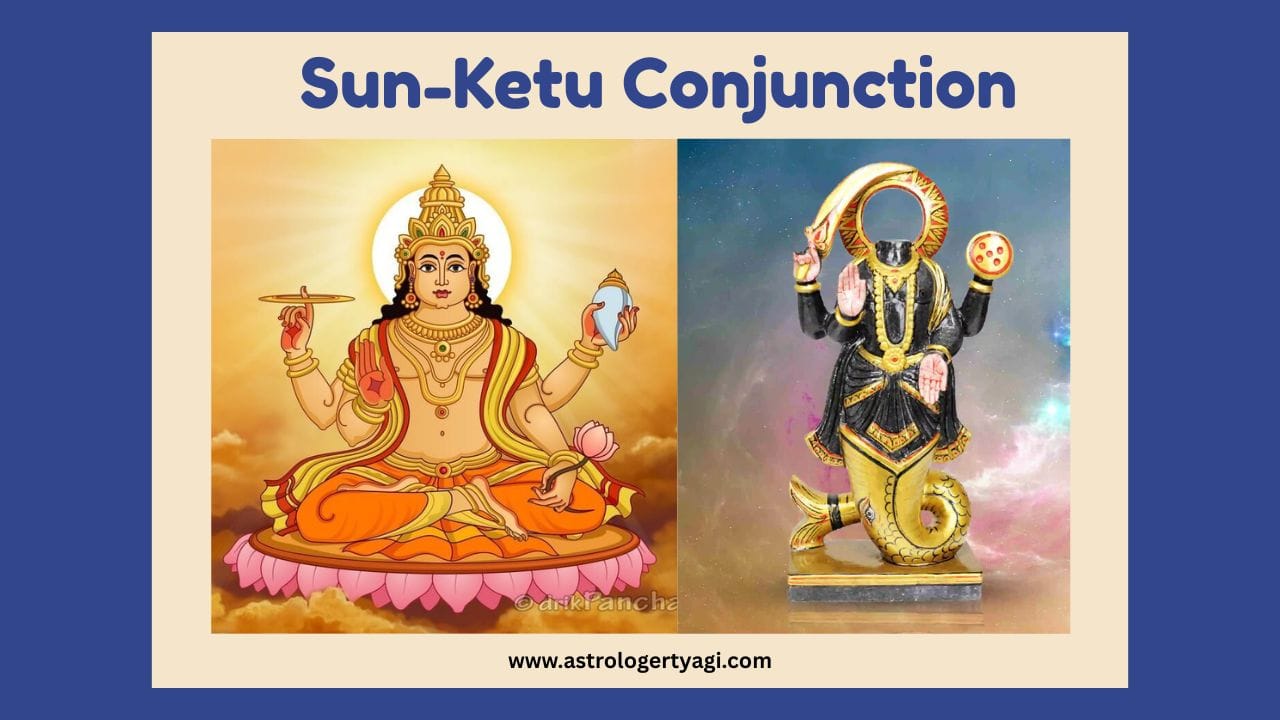
In the celestial cabinet of Vedic Astrology, The term “Grahan” (Eclipse) yoga refers to the Sun-Ketu Conjunction. This union represents the fusion of the King/Source of Light and the Smoky Shadow that represents the tail of the dragon. Mythologically, the Nodes (Rahu and Ketu) are the eternal enemies of the Sun, having been responsible for its “devouring” during eclipses.
This is the “Yoga of the Reluctant Leader.” It represents a soul that possesses great power and light but feels a deep, spiritual detachment from worldly authority. While it can create struggles with self-identity and the father, it ultimately produces an individual of profound spiritual insight who can lead others from a place of total ego-transcendence.
2. Understanding the Sun (Surya) in Astrology
The Sun is the Atmakaraka, the significator of the soul’s essence and our central core.
Core Significations of the Sun:
The Soul and Self: Our core identity, ego, and sense of “I am.”
Authority: It rules kings, governments, and the “boss” figure.
The Father: It signifies the father’s influence and our paternal heritage.
Vitality: Physically, it rules the heart, the eyes, and our life force.
Dharma: The light that guides us toward our righteous purpose.
3. Understanding Ketu in Astrology
Ketu is the Mokshakaraka, the “Significator of Liberation.” He is the headless body that looks inward.
Core Significations of Ketu:
Detachment: Ketu creates a “disinterest” in material recognition.
Past-Life Mastery: It represents skills and wisdom we have already perfected in previous lives.
Inward Journey: It rules meditation, isolation, and the desire to dissolve the ego.
Sudden Eclipse: It can “smoke out” the clarity of the planet it touches, leading to confusion or sudden changes.
The Witness: Ketu acts as an observer, unattached to the drama of life.
4. The Sun and Ketu Conjunction: The Core Dynamics
When these two meet, it creates a dynamic of “Ego Dissolution.” The Sun wants to be seen and celebrated; Ketu wants to remain hidden and detached. This results in a “Smoky Identity,” where the native may struggle to know who they truly are in the material world.
The Psychological Challenge:
The primary struggle is Self-Validation. Because Ketu “eclipses” the Sun, the native often feels invisible or misunderstood by authority figures. There is a deep-seated feeling of “not belonging” to the world’s power structures. In youth, this can manifest as a lack of confidence or a “rebel without a cause” attitude. The “Inner Light” is present, but it feels like a lamp placed inside a dark room.
The Closeness Factor: Degrees and Orb of Conjunction:
Exact (0° to 5°): A true “spiritual eclipse.” Significant detachment from the father and a life defined by deep spiritual seeking.
Close (5° to 12°): The native is an unconventional leader—someone who leads from the background or through spiritual influence.
Wide (Over 15°): The influence is milder; the native is simply private about their power.
5. Positive Effects of Sun and Ketu Conjunction
Ego-less Leadership: They can lead without the need for personal praise. This makes them exceptional spiritual leaders, researchers, or whistleblowers.
Profound Intuition: Ketu provides the Sun with a “psychic eye.” They can see through the lies of others and understand the hidden truth behind any situation.
Spiritual Authority: They possess a natural “aura” of wisdom. People are drawn to them not for their title, but for the depth of their soul.
Past-Life Wisdom: They often “know” things without being taught. They have an innate mastery over leadership or spiritual sciences from previous incarnations.
6. Negative Effects of Sun and Ketu Conjunction
Identity Crisis: A persistent feeling of “Who am I?” and a lack of clear direction in career during the early years.
Friction with Father: The relationship with the father may be distant, mysterious, or marked by a lack of understanding. The father may be a spiritual person or someone who was physically/emotionally absent.
Health Issues: Potential for “low-fire” issues, such as weak digestion, low blood pressure, or sensitivity in the eyes.
Social Withdrawal: A tendency to isolate oneself or feel “alienated” from society and government systems.
7. Effects of Sun and Ketu Conjunction in Different Houses
1st House: A mysterious, “monk-like” personality. The native may be very humble or struggle with their self-image until they find a spiritual path.
2nd House: Wealth comes from unconventional or spiritual sources. The native may be detached from family traditions.
3rd House: Intense mental focus. Great talent for research or writing on “unseen” topics. May have a distant relationship with siblings.
4th House: A feeling of being “homeless” even when at home. The native seeks peace through solitude rather than family gatherings.
5th House: The Mystic Mind. Exceptional intelligence in mathematics or occult sciences. May be detached from children or have “spiritually gifted” children.
6th House: The native wins over enemies by “ignoring” them. Excellent for healers or people working in hidden research roles.
7th House: Attracts a partner who is a seeker, a loner, or highly unconventional. Marriage is a “spiritual contract.”
8th House: High occult power. Sudden realizations about life and death. Deep interest in meditation and the “afterlife.”
9th House: Rejection of traditional religion in favor of direct spiritual experience. The father may be a saintly or very mysterious figure.
10th House: The Background Leader. The native gets fame only when they stop chasing it. Success in research, intelligence, or spiritual organizations.
11th House: Social circles consist of yogis, researchers, or outcasts. Gains come through “Karmic” or sudden sources.
12th House: The Gateway to Moksha. This is a highly spiritual placement. The ego is ready to dissolve into the divine. High potential for enlightenment.
8. Factors Modifying the Conjunction’s Effects
1. Jupiter’s Aspect: The Alchemist’s Touch
In Vedic Astrology, Jupiter (Guru) is the great benefic. Its aspect acts as a “sanctifier” that can purify the chaotic or restrictive energy of Ketu.
From Confusion to Clarity: Without Jupiter, Sun-Ketu can feel like walking through a fog—the native may struggle with self-doubt or a “hidden” identity. Jupiter’s aspect provides the light (Sattva) needed to see through the illusion. The “void” of Ketu is filled with Jupiter’s expansive wisdom.
The Spiritual Teacher: This is a classic placement for a Satguru or a world-class philosopher. While the native may still lack a traditional worldly ego, they replace it with Dharma. They don’t lead through force (Sun) but through truth (Jupiter).
Integration of the Shadow: Jupiter helps the native understand that their feeling of “not belonging” is actually a detachment that allows them to guide others objectively. The struggle for self-recognition evolves into the realization of the Universal Self.
2. Sign Placement: The Field of Battle
The sign in which the Sun and Ketu meet determines whether the native experiences this conjunction as a quiet surrender or a violent internal struggle.
Leo: The Conflict of the Throne
When this conjunction occurs in Leo, the Sun is in its own kingdom. This creates a unique paradox:
Ego vs. Dissolution: The Sun in Leo wants to be seen, recognized, and validated. Ketu, however, is the “headless” planet that seeks to dissolve the ego.
The Internal Tug-of-War: The native often feels a deep, burning desire for authority or creative expression (Leo), but every time they reach for it, Ketu creates a feeling of emptiness or a sudden loss of interest.
The Lesson: This placement forces the native to learn Humility in Power. The intense internal conflict usually settles only when the native learns to lead from a place of service rather than a place of “I.”
Aries: The Spiritual Warrior
Aries is the sign of the Sun’s exaltation (Ucha), representing the highest peak of solar energy—initiative, courage, and beginnings.
The Crusader: When Ketu joins an exalted Sun, the native’s drive is directed away from material conquest and toward “Righteous Action.” They become a Spiritual Warrior.
Fearlessness: Because Ketu represents the past life and the Sun represents the “Will,” the native often feels they have nothing to lose. This makes them incredibly brave, often fighting for causes that others are too afraid to touch.
Cutting Through Illusion: Like a sword (Aries) cutting through the veil (Ketu), these individuals are experts at exposing hypocrisy or breaking down outdated systems. They lead by action and sacrifice rather than just words.
9. Timing the Effects: Dasha Periods
In Vedic Astrology, the Vimshottari Dasha system dictates when the latent potential of a planetary conjunction will “ripen.” When the Sun and Ketu are conjunct, their combined periods act as a psychological and spiritual refinery.
Because these two planets represent the Source of Light (Sun) and the Shadow/Eclipse (Ketu), their sub-periods often feel like a total recalibration of the native’s life direction.
9. Timing the Effects: Dasha Periods
A. Sun Mahadasha – Ketu Antardasha: “The Stripping of the Mask”
This period is often described as a “Sacred Pruning.” The Sun represents your career, your reputation, and how you project yourself to the outside world. Ketu’s job is to detach you from anything that is not authentic to your soul.
The Professional “Void”: You may experience a period where your career feels stagnant or “quiet.” This is not necessarily a failure, but rather Ketu “switching off” the external noise. If you try to force a promotion or chase fame during this time, you will likely encounter frustration.
Ego-Dissolution: If you have been building your identity on titles, wealth, or the approval of others, Ketu will systematically remove these “masks.” This can be painful if you cling to them, but liberating if you let go.
The Meditative Call: This is the ultimate time for a retreat. The Sun provides the soul-level vitality to dive deep into Ketu’s spiritual waters. Many people find their true calling or a deep interest in occult sciences and meditation during this specific window.
Health Note: Vitality may feel lower than usual. It is essential to focus on heart health and “inner light” practices rather than high-intensity external activities.
B. Ketu Mahadasha – Sun Antardasha: “The Sudden Illumination”
If the Sun-Ketu Mahadasha is about letting go, the Ketu-Sun period is about “Emergence.” After wandering through the “smoke” of Ketu’s confusion, the Sun’s sub-period acts as a sudden piercing of the clouds.
The “Headless” Leader: Because Ketu is the dominant planet here, the ego remains surrendered. When the Sun enters as the sub-lord, it grants authority, but the native often feels like a “vessel” for power rather than the owner of it.
Unexpected Recognition: Success often comes suddenly and from unexpected quarters. You might be called to a position of leadership not because you campaigned for it, but because your detachment makes you the most “trustworthy” candidate.
Clarity of Purpose: The confusion that characterized the earlier part of the Ketu Dasha suddenly vanishes. The native realizes why they had to go through a period of isolation—it was to prepare them for the responsibility the Sun now brings.
Public Impact: This is a peak time for “Dharmic” work. If you are involved in charity, spiritual teaching, or social reform, this period can catapult your influence to a national or international level.
10. Transit of Planets Over Sun-Ketu Conjunction
A. Solar Eclipse Transits: The “Cosmic Reset”
Because Sun and Ketu together are a “latent eclipse,” a transiting solar eclipse happening exactly on this degree acts as a system reboot.
Career Disruptions: The Sun represents the public self and career. An eclipse here can bring a sudden, unpredicted end to a job or a total change in professional direction. It feels like the universe is “blacking out” an old path to force you onto a new one.
The Father Figure: This transit often marks a critical turning point in the native’s relationship with their father or a dominant authority figure. It can represent the father’s retirement, a health crisis, or a psychological “breaking away” from his influence to find one’s own soul path.
Identity Dissolution: You may experience a few days of intense “non-existence” or feeling invisible. This is meant to show you that your ego is not who you actually are.
B. The Ketu Return (Ages 18, 36, 54)
Every 18.5 years, transiting Ketu returns to the exact spot it occupied at your birth. When it lands on your natal Sun, it initiates a Karmic Harvest.
Age 18 (The Fork in the Road): Often manifests as a refusal to follow the “expected” life path. The native may drop out of a traditional college or choose a radically different identity than their peers.
Age 36 (The Spiritual Mid-Life): This is the most potent return. Many people with Sun-Ketu experience a “career collapse” or a deep internal crisis at 36, which leads them directly into spiritual practice, yoga, or occult studies. It is the death of the “Social Ego.”
Age 54 (The Master’s Wisdom): At this stage, the struggle of the Sun-Ketu conjunction is usually resolved. The native steps into the role of a mentor or elder, having fully detached from the need for external validation.
C. Saturn Transit: The “Reality Check”
When Saturn transits over your natal Sun-Ketu, it adds weight and consequence to Ketu’s detachment.
Forced Isolation: Saturn may bring circumstances that physically isolate you (like moving to a remote place or a demanding job that requires solitude).
Karmic Debt: You are held accountable for how you have used your power (Sun). If you have been ego-driven, Saturn and Ketu together will provide a “humbling” experience. If you have been spiritual, it grants “Siddhi” (attainment) through disciplined practice.
D. Rahu Transit (The Inverse Hit)
When transiting Rahu moves over your natal Sun-Ketu, it creates an “Obsessive Identity” phase.
The Hunger for Recognition: Since Rahu is the head and Ketu is the body, Rahu’s transit over your Sun-Ketu point creates a sudden, temporary “hunger” to be seen. However, because it’s hitting natal Ketu, this fame often feels hollow or “fake” once achieved.
11. Sun and Ketu Conjunction in Different Nakshatras
A. Sun-Ruled Nakshatras (e.g., Krittika)
The Theme: Refining Power through Fire
When Sun-Ketu sits in a Sun-ruled Nakshatra like Krittika (the “Star of Fire”), the solar energy is amplified, but Ketu’s presence creates a “Controlled Burn.”
The Sharp Blade: Krittika is symbolized by a razor or a flame. The native possesses a sharp, piercing intellect and a direct nature. However, Ketu forces this “blade” inward. Instead of cutting down enemies, the native is tasked with cutting away their own ego-attachments.
The Purification Process: Much like gold is purified in a furnace, the native’s identity undergoes constant heat. They may face situations where their pride is “burned” repeatedly until only the purest essence of their soul remains.
Leadership through Purity: These individuals often become leaders who are incredibly disciplined and “clean.” They have no patience for fluff or corruption. Their power comes from the fact that they have conquered their own desires.
Karmic Task: To use “Solar Fire” to incinerate the “Ketu Fog.” The native must learn that true power is not about controlling others, but about self-mastery.
B. Ketu-Ruled Nakshatras (e.g., Ashwini, Magha)
The Theme: Resolving the Ancestral Ego
When Sun-Ketu sits in Ketu’s own Nakshatras, the connection to past lives and the lineage (Pitris) becomes the dominant force in the native’s life.
Magha (The Throne): This is the most intense placement. Magha is ruled by the Ancestors (Pitris).
The Burden of the Crown: The native often feels they have inherited a “spiritual debt” or an unfinished mission from their father or grandfathers.
The Reluctant King: They may be born into a powerful family but feel a deep urge to walk away from it, or they may feel that their family’s “pride” is a hollow burden.
Mission: They are here to “complete” the spiritual evolution of their lineage. By achieving Moksha or high spiritual states, they liberate not just themselves, but their ancestors.
Ashwini (The Healers): * Swift Transformation: In Ashwini, the Sun-Ketu conjunction works like a spiritual surgeon. The native has “miraculous” or sudden insights that can heal others.
Identity through Service: The ego is surrendered to the act of healing. The native finds their “Sun” (light) by being a “Ketu” (channel) for divine healing energy.
Karmic Task: To move faster than the ego. The native must act on instinct and “Dharma” rather than sitting and overthinking their own importance.
Suggestion: Venus-Ketu Conjunction In Astrology
12. Remedies for Sun and Ketu Conjunction
Worship Lord Ganesha: Ganesha is the deity of Ketu. Worshiping Him helps “remove the obstacles” in the path of the Sun’s light.
Gayatri Mantra: Reciting this mantra daily helps clear the “smoke” around the soul and provides mental clarity.
Respecting the Father: Even if the relationship is difficult, showing basic respect to the father figure helps heal the paternal karma.
Donating Saffron or Gold: Donating items of the Sun on Sundays to spiritual seekers or monks helps balance the energy.
13. Free Will vs. Destiny
The Destined Reality: The “Caged” Sun
Destiny has decreed that for this lifetime, your Sun cannot operate in a purely “Rahu-like” extroverted manner.
The Worldly Limit: You may find that whenever you chase external fame, power, or “normal” social validation, the path is blocked or the result feels hollow. This is Prarabdha Karma (fixed destiny). You are “destined” to have an unconventional relationship with authority and the ego.
The “Headless” Authority: Ketu has already mastered the Sun’s lessons in past lives. Therefore, in this life, destiny “denies” you a traditional throne because you have already sat on it. You are being pushed toward a different kind of sovereignty.
The Role of Free Will: Detachment vs. Disinterest
This is where your Kriyamana Karma (present-day choice) comes into play. You have two primary ways to respond to this “eclipsed” Sun:
Choice A: The Path of Disinterest (Negative Free Will)
If you fight your destiny, you may fall into the trap of being “disinterested.”
The Shadow: “If the world won’t recognize me as a leader, I won’t participate at all.” This leads to bitterness, a “victim” mentality, and spiritual stagnation.
The Result: You become a “King in Exile,” hiding in the shadows because of a bruised ego, perpetually angry that your “light” isn’t being reflected back by others.
Choice B: The Path of Detached Leadership (Positive Free Will)
If you use your free will to align with the conjunction, you choose Detachment.
The “Silent Light”: You choose to lead without needing your name on the building. You become the advisor, the healer, or the spiritual anchor. You use your “Solar Power” to illuminate others rather than yourself.
The Internal King: You realize that your kingdom is internal. Your sense of worth comes from your connection to the Divine (Sun as Soul) rather than your connection to the Social Order (Sun as Ego).
14. Conclusion
The “Fireproof” Character
Usually, a person’s identity is like a house made of wood—it can be burned by criticism, loss of status, or public failure. However, the Sun-Ketu native has already had their “wooden” ego burned away by Ketu’s detachment.
Immunity to External Validation: When the Sun (reputation) is joined by Ketu (disconnection), the native eventually stops looking at the “social mirror” to see who they are.
The Result: They become fireproof. You cannot insult a person who has no ego to defend. You cannot threaten a person who is not attached to their titles. This creates a terrifyingly powerful level of integrity; they do what is right because it is Dharma, not because it will make them popular.
The Realization of Independence
The Sun represents the “I Am” principle. Ketu represents “Moksha” (liberation). Together, they deliver the ultimate spiritual realization: The soul is independent of all material labels.
Beyond the Body: The native realizes they are not just their physical form or their gender.
Beyond the Career: They realize they are not their “job” or their “bank account.“
The Spirit is Free: Once the native stops trying to “fit” the Sun into a worldly box, the spirit expands. They become a “Jivanmukta” (one who is liberated while still in a body).
The “Silent Light” Legacy
The legacy of a Sun-Ketu individual is rarely written in monuments or statues. Instead, it is written in the hearts of those they have guided.
The Beacon: Like a lighthouse, they don’t move toward the ships to save them; they simply stand in their truth and shine. Their presence alone calms the “ego-storms” in others.
The Return to Source: Ultimately, this conjunction is a return ticket. It signifies a soul that is “done” with the superficial games of power and is ready to merge back into the Divine Light.
Suggestion: Sun-Saturn Conjunction
15. FAQs
Q1: Will I ever get fame?
Yes, but your fame will be “indirect.” People will know you for your wisdom or your unique contribution, not for your ego.
Q2: Is this bad for my health?
Not necessarily, but you must take care of your heart and eyes and maintain a “fiery” (warm) diet.
Q3: Why do I feel like an outsider?
Because your soul has already “graduated” from many worldly lessons. You are here to look beyond the surface.
Suggestion: Mercury-Venus Conjunction in Astrology