1. Introduction
While the Sun gets all the credit for being the powerhouse of the solar system, it is the Moon that actually runs the “boots on the ground” operation of your life. In astrological terms, if the Sun is the King (the soul and your core identity), the Moon is the Queen (the mind and your emotional landscape). The Sun dictates who you are in your highest moments, but the Moon dictates how you survive your lowest ones.
We like to think we are logical creatures driven by facts, but the reality is that feelings control decisions far more than logic. You might know a career move is “rational,” but if your Moon doesn’t feel safe with it, you’ll find a way to self-sabotage. Understanding your Moon sign is essentially gaining the blueprint for your subconscious; it explains why you do what you do when you aren’t thinking about it.
2. The Symbolism of Water and Reflection
The Moon possesses no light of its own; it is a mirror for the Sun’s radiance. This is a profound metaphor for human perception. The Moon represents our emotional processing and reflection. Just as the tides are pulled by the Moon, our internal “waters”—our moods and instincts—are in constant flux.
In a perfect state, the mind is like a still lake, reflecting reality exactly as it is. However, when the “waters” of the mind are choppy due to trauma or stress, the reflection becomes distorted. You aren’t seeing the world; you’re seeing a wavy, broken version of it. The Moon governs this filter through which you view your entire existence.
3. The Moon as Manas (Mind)
In Vedic astrology, the Moon is referred to as Manas. This isn’t the “intellect” that solves math problems; it is the sensory mind. It’s the part of you that craves a specific snack when you’re sad or feels a “vibe” when you walk into a room.
Memory: Not just dates and names, but the feeling of a past event.
Imagination: The ability to visualize outcomes.
Habits: The “autopilot” mode that keeps you functioning. Your comfort zone is the Moon’s primary residence. It is the psychological “home” you retreat to when the world feels too loud.
4. Moon and Emotional Security
At its core, the Moon asks one question: “What do I need to feel safe?” For some, security is a high-yield savings account; for others, it’s a hug or a quiet room.
When you are under stress, your Sun (ego) often takes a backseat, and your Moon (instinct) takes the wheel. This is why some people get angry when they’re hurt, while others withdraw. Your Moon sign determines your “default setting” for emotional survival. If your Moon is neglected, you will perpetually feel like a stranger in your own life, regardless of how much external success you achieve.
5. Moon and Childhood Conditioning
The Moon represents the Mother or the primary caregiver, but more importantly, it represents the emotional atmosphere of your upbringing. Two siblings can grow up in the same house but have different Moon signs, meaning they perceived their childhood entirely differently. One might have felt nurtured (a Moon in Taurus), while the other felt a sense of duty or coldness (a Moon in Capricorn). These early impressions form the “emotional software” that runs in the background of your adult life.
6. Psychological Signs of a Strong Moon
A well-placed or “strong” Moon manifests as emotional resilience. * Empathy: The ability to hold space for others without losing yourself.
Steady Sleep: Since the Moon rules the night, a calm mind leads to deep rest.
Intuition: A “gut feeling” that is usually right. People with a strong Moon don’t necessarily avoid pain; they simply process it efficiently without letting it define them.
7. Psychological Signs of a Weak or Afflicted Moon
When the Moon is “afflicted” (by stress or difficult planetary aspects), the mind becomes a turbulent place.
Overthinking: The mind spinning in circles because it can’t find a “safe” place to land.
Anxiety: A constant state of “waiting for the other shoe to drop.”
Attachment Issues: Clinging too hard to people or things to find the security you lack internally.
8. Moon and Emotional Intelligence
There is a massive difference between being “smart” and being “wise.” Mercury governs the intellect—the ability to process data. The Moon governs Emotional Intelligence (EQ). A person with high EQ can “feel” the room before a single word is spoken. They understand the subtext of human interaction. While Mercury can write a great speech, the Moon knows exactly when to deliver it to move an audience to tears.
9. Moon and Habit Patterns
The Moon is the planet of repetition. Because it orbits the Earth so quickly, it represents our daily cycles: what we eat, how we sleep, and our addictions. Whether it’s a healthy habit like morning meditation or a destructive one like late-night doom-scrolling, these are lunar imprints. To change your life, you cannot just use your Sun’s “willpower”; you must negotiate with your Moon’s “habits.” You have to make the new behavior feel safe enough to become a routine.
Continuing our exploration of the lunar psyche, we move from the psychological architecture of the Moon into the profound mythological narratives that explain why our minds behave the way they do. In Vedic lore, the Moon is personified as Chandra, and his stories are maps of the human internal experience.
10. The Birth of Chandra
The Puranas describe the Samudra Manthan, or the Churning of the Milky Ocean, as a celestial tug-of-war between gods and demons to uncover the nectar of immortality. Among the treasures that rose from the depths was Chandra.
The symbolism here is striking: the Moon represents the emotional essence born from the deep, unconscious waters. Just as the ocean holds both hidden monsters and priceless jewels, your subconscious mind is a vast reservoir of everything you have ever felt. The “churning” is the process of life—stress, joy, and conflict—that forces your hidden emotions to the surface. The Moon is that part of you that survives the churning, representing the refined nectar of your lived experience.
11. Chandra and His 27 Wives (The Nakshatras)
In the heavens, Chandra married the twenty-seven daughters of King Daksha. These daughters represent the 27 Nakshatras (Lunar Mansions) through which the Moon travels every month. While he was supposed to spend equal time with each wife, Chandra became obsessed with Rohini, the most beautiful and charming of them all. He neglected the others to stay by her side.
This is a brilliant metaphor for the biased nature of the mind. The mind rarely stays neutral; it gets “hooked” on what it finds pleasurable. Whether it is a specific person, a comforting memory, or a destructive habit, the Moon (the mind) tends toward favoritism. We fixate on what we love and ignore the rest of our responsibilities, leading to an imbalance in our psychological ecosystem.
12. The Curse of Daksha
When the other 26 daughters complained to their father about Chandra’s neglect, King Daksha was furious. He cursed Chandra to wither away and lose his luster, eventually leading to his total disappearance. Realizing that the world would fall into darkness without the Moon, the gods intervened, and the curse was modified: Chandra would now fade (wane) and grow (wax) in a perpetual cycle.
This story validates the natural cycles of emotional highs and lows. We often judge ourselves for feeling “off” or “down,” but the Moon reminds us that fading is not a failure—it is a phase. Just as the Moon must become dark to be reborn as a New Moon, the human mind requires periods of withdrawal, introspection, and “waning” to recharge its creative “waxing” energy.
13. Chandra and Lord Shiva
Desperate to save himself from the curse, Chandra sought refuge with Lord Shiva. Shiva could not entirely remove the curse of a King, but he offered Chandra a place of protection: he placed the crescent Moon upon his own matted hair.
The symbolism here is the ultimate remedy for mental unrest. Shiva represents the Pure Consciousness and the state of deep meditation (Samadhi). By placing the Moon on his head, he signifies that the “unstable mind” (Chandra) can only be calmed when it is surrendered to the “higher self” (Shiva).
When your emotions feel like they are spinning out of control—when the “curse” of overthinking or anxiety takes hold—the astrological prescription is meditation. You are essentially asking your inner Shiva to hold your inner Moon. It doesn’t stop the Moon from changing phases, but it ensures that the mind remains anchored to something eternal, preventing the “waves” of emotion from drowning the soul.
14. Astronomical Speed
The Moon is the fastest-moving body in astrology, sprinting through a zodiac sign every 2.25 days. While Saturn takes thirty years to complete a circuit, the Moon does it in less than a month.
Because of this speed, the Moon governs our daily moods and the timing of events. It is the “second hand” on the cosmic clock. This is why you can feel invincible on Tuesday and completely drained by Thursday afternoon—your internal emotional climate has literally shifted into a new elemental territory.
15. Moon in Zodiac Signs
The element of your Moon sign dictates your “first response” to the world:
Fire (Aries, Leo, Sagittarius): Reactive and passionate. You “do” something about your feelings immediately.
Earth (Taurus, Virgo, Capricorn): Practical and grounded. You process emotions by organizing your physical world.
Air (Gemini, Libra, Aquarius): Analytical. You try to “think” or talk your way through a feeling.
Water (Cancer, Scorpio, Pisces): Intense and absorbent. You don’t just have feelings; you are the feeling.
16. The Moon in the 12 Houses: Where Your Heart Lives
The house placement shows where you seek comfort and where your mind most frequently wanders:
1st: Your emotions are written on your face; you are highly sensitive to your environment.
2nd: You feel safe when your bank account is full or you have “nice things.”
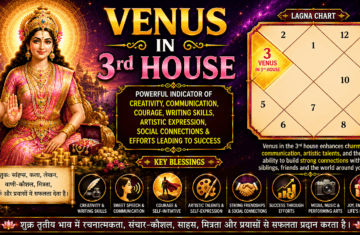
3rd: A restless, busy mind that finds peace through writing or short trips.
4th: Deeply private; your home is your sanctuary and your “psychic battery.”
5th: A romantic, creative mind that needs play and self-expression to feel alive.
6th: An anxious mind that finds peace through service, routine, and “fixing” things.
7th: You find your emotional identity through the mirror of a partner.
8th: A “detective” mind that is obsessed with the occult, secrets, and deep transformation.
9th: Philosophical; you find comfort in high learning, travel, or belief systems.
10th: Your “reputation” affects your mood; you need public respect to feel secure.
11th: Socially driven; you need a “tribe” or a community to feel emotionally whole.
12th: The hidden world; your emotions are vivid but often kept in a “secret room” inside.
17. Moon’s Dignity: The Comfort Level
In astrology, “Dignity” tells us how comfortable a planet is in a specific sign.
Exalted in Taurus: Here, the Moon is stable, sensory, and content.
Debilitated in Scorpio: The Moon struggles here because Scorpio is too turbulent for the Moon’s need for peace.
Own Sign (Cancer): The Moon is at its most nurturing and intuitive.
18. Waxing vs. Waning (The Pakshas)
The phase of the Moon at your birth matters immensely.
Shukla Paksha (Waxing): Usually brings a more resilient, outgoing, and optimistic mental state.
Krishna Paksha (Waning): Tends toward an introverted, reflective, and sometimes melancholic mind that seeks deep solitude.
19. Moon Afflictions: The Emotional Challenges
When other planets “touch” the Moon, they color your mental health:
Saturn: Can feel like a heavy cloud of duty or depression.
Rahu: Creates illusions, phobias, and an “insatiable” emotional hunger.
Ketu: Leads to feeling disconnected or “homeless” emotionally.
Mars: Creates a “short fuse” and an impulsive emotional nature.
Sun (Amavasya): A New Moon birth often feels like the mind is “burnt out” or deeply internal.
20. Grahan Yoga: The Eclipse Birth
If you were born during an eclipse (Sun-Moon-Nodes alignment), your life often feels like a series of fated, high-intensity karmic lessons. There is a “shadow” on the mind that requires a lifetime of spiritual work to clear, but it often yields profound psychological depth.
21. Moon Conjunction Analysis: The Emotional Blends
Moon + Jupiter (Gaj Kesari Yoga): The “Elephant-Lion” yoga. This creates a mind that is wise, prosperous, and emotionally expansive.
Moon + Mercury: A sharp, witty mind where feelings and thoughts are beautifully integrated.
Moon + Venus: A soul that craves beauty, harmony, and refined sensory experiences.
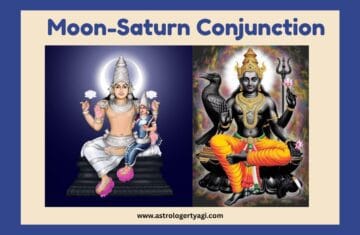
Moon + Saturn (Vish Yoga): Often called the “poison yoga,” but in reality, it is the yoga of the Stoic. It builds immense emotional maturity through early hardship.
Moon + Rahu/Ketu: This is the “shamanic” mind—either obsessed with the material world (Rahu) or completely detached from it (Ketu).
To wrap up our deep dive into the lunar psyche, we move from the static “blueprint” of your birth chart into the dynamic movement of time. In astrology, the Moon isn’t just a sign; it is a clock. It dictates when your internal seasons change through the systems of Mahadasha (major cycles), Antardasha (sub-cycles), and daily transits.
22. Moon Mahadasha: The 10-Year Emotional Immersion
When you enter a Moon Mahadasha, your life’s focus shifts from the external world to the internal. Over these ten years, the “Queen” takes the throne.
Emotional Activation: Dormant feelings, childhood traumas, or deep-seated desires suddenly surface. It is a decade of “feeling” rather than just “doing.”
Family & Home: This period often brings major shifts in your domestic life—buying a home, marriage, or dealing with maternal health and legacy.
The Stability Test: If your Moon is well-placed, this is a time of immense peace and nurturing. If afflicted, it can be a decade-long rollercoaster of mood swings and mental health challenges.
23. Moon Antardasha: The Seasonal Shift
Even if you are in a Rahu or Saturn Mahadasha, the arrival of a Moon Antardasha (a sub-period lasting months) acts like a sudden change in weather. It softens the harshness of a work-heavy cycle with a sudden need for comfort. It’s the period where you might suddenly feel “homesick” for a life you haven’t built yet, or find yourself making major decisions based on a “gut feeling” rather than the overarching logic of the main cycle.
24. Moon Transits: The Daily Weather Report
Because the Moon moves so fast, its transits are the most relatable part of astrology.
When the Moon transits your 8th or 12th house: You might feel inexplicably heavy, tired, or antisocial for two days.
When it hits your 1st or 5th house: You feel a surge of charisma and creative energy. Tracking the Moon’s daily movement helps you realize that your “bad moods” aren’t permanent character flaws—they are just passing clouds.
25. Moon and Relationships: Your Attachment Style
Your Moon sign is your Love Language. While Venus is how you flirt, the Moon is how you stay.
Attachment Style: A Moon in Capricorn might have an “avoidant” style, fearing vulnerability. A Moon in Pisces might have an “anxious-preoccupied” style, wanting to merge souls.
Nurturing Capacity: How do you take care of someone when they are sick? Do you cook for them (Taurus), give them space (Aquarius), or worry alongside them (Virgo)? This is your lunar footprint in a partnership.
26. Moon and Career: The Natural Caregivers
The Moon governs the “nurturing” professions. If your Moon is strong and connected to your 10th house of career, you will naturally gravitate toward:
Psychology & Counseling: Navigating the “Manas” of others.
Hospitality & Food: Providing the ultimate lunar comfort: nourishment.
Real Estate: Dealing with “home” and security.
Medicine & Nursing: The literal act of caregiving and bodily comfort.
27. Moon and Public Image: Connecting to the “Mood”
In the charts of politicians, actors, and influencers, the Moon is often the most important planet. Why? Because the Moon governs the public’s emotional pulse. A politician with a strong Moon (like a Cancer or Taurus Moon) can walk into a room and make everyone feel like they are “one of them.” They don’t just speak to the mind; they speak to the collective subconscious. In media and marketing, the Moon represents “branding”—the feeling people get when they hear a name or see a logo. If the Moon is weak, the public finds the person cold or “out of touch.”
In the final arc of our lunar study, we move from the cosmos into the literal tissues of your body. In medical astrology, the Moon is not just a symbol; it is the biological regulator. It governs the “juices” of life—the fluids, the rhythms, and the delicate chemical messages that tell your body whether to rest or digest.
28. Moon and the Hormonal System
The Moon governs the endocrine system, particularly the hormonal cycles that fluctuate like the tides. In a very literal sense, the Moon is the “General” of the body’s fluid balance and reproductive health.
When the Moon is under stress in a birth chart, we often see issues with the thyroid, pituitary gland, or reproductive hormones. Because the Moon is so fast-moving, it acts as a trigger for hormonal shifts. This is why many people feel a surge of irritability or “brain fog” during specific lunar phases. The Moon’s job is to maintain homeostasis—the internal balance—and when your emotional state is chaotic, your hormonal “tide” goes out of sync, leading to systemic fatigue.
29. Moon and Sleep: The Night Watchman
The Moon is the ruler of the night and the subconscious mind. Consequently, it is the primary planet governing sleep quality and the dream state.
If your Moon is in a restless Air sign (like Gemini) or under the harsh gaze of Mars, your mind “stirs the pot” right when you should be drifting off. You might suffer from “busy brain” or vivid, aggressive dreams. Conversely, a Moon influenced by Saturn can lead to heavy, non-restorative sleep or a feeling of being “paralyzed” by thoughts of duty. To fix sleep, an astrologer doesn’t just look at your bedroom; they look at how you are treating your Moon during the day. If you don’t process your emotions while awake, the Moon will force you to process them in your dreams.
30. Moon and Digestion: The Stomach and the Soul
In astrology, the Moon rules the stomach and the breasts. There is a profound link between how you feel and how you eat. The Moon governs the mucous membranes and the digestive fluids required to break down food.
Have you ever noticed that you can’t eat when you’re anxious, or that you “stress-eat” when you’re lonely? That is your Moon in action. The stomach is often called the “second brain,” and in Vedic thought, this is where the Moon resides. People with an afflicted Moon often suffer from acidity, bloating, or food sensitivities because their “emotional digestion” is backed up. You aren’t just what you eat; you are what you absorb, both nutritionally and emotionally.
31. Psychosomatic Illness: When the Mind Speaks Through the Body
This is perhaps the most critical lesson of the Moon: the body is a mirror of the mind. Psychosomatic illnesses are physical symptoms that have an emotional root, and the Moon is the bridge between the two.
Suppressed Anger (Moon-Mars): Often manifests as skin rashes, inflammation, or sharp stomach pains.
Grief and Loneliness (Moon-Saturn): Can manifest as chronic fatigue, bone density issues, or a literal “heavy” feeling in the chest.
Anxiety and Fear (Moon-Rahu): Often shows up as nervous indigestion, IBS, or “mystery” allergies.
In the final chapters of our lunar exploration, we move beyond the physical body and deep into the metaphysical. The Moon acts as a bridge between your past, your current mental state, and the unseen realms of the spirit.
32. Moon and Past-Life Emotional Karma
In the Vedic tradition, the Moon is the vessel of Samskaras—the deep, latent impressions gathered over many lifetimes. While the Sun represents the soul’s future direction, the Moon is a suitcase packed with unresolved attachment themes.
If you find yourself experiencing an irrational fear of abandonment, an instant “soul-connection” with a stranger, or a repetitive pattern of choosing unavailable partners, you are likely witnessing the Moon’s karmic memory. These aren’t just “bad luck”; they are emotional echoes. The sign and house of your Moon indicate where you left things “unfinished” in a previous life. For instance, a Moon in the 12th house often suggests a past spent in isolation or spiritual devotion, leading to a current life where the person feels a deep, inexplicable “homesickness” for a place they’ve never been.
33. Moon and Meditation: Stabilizing the Fluctuations
Patandjali’s Yoga Sutras define yoga as the “stilling of the fluctuations of the mind” (Chitta Vritti Nirodha). In astrology, those “fluctuations” are the Moon. Because the Moon is so fast and easily influenced by other planets, the mind is naturally prone to “scattering.”
Meditation is the specific technology used to “fix” a difficult Moon. When we meditate, we aren’t trying to destroy the mind; we are trying to anchor it. By observing the breath (which is also ruled by the Moon’s rhythmic nature), we create a “Shiva-like” distance from our emotions. Instead of being in the storm, we become the observer of the storm. For someone with a “weak” Moon, daily meditation is less of a hobby and more of a survival tool—it provides the stability that the internal emotional landscape lacks.
34. Moon and Intuition: Psychic Sensitivity vs. Imagination
There is a thin, silver line between a “gut feeling” and “overthinking.” Both are lunar processes, but they operate at different frequencies.
True Intuition (The Strong Moon): This is a quiet, immediate “knowing.” It usually comes without a heavy emotional charge. It is the Moon acting as a clear mirror, reflecting a reality that hasn’t happened yet.
Anxious Imagination (The Afflicted Moon): This is loud, repetitive, and usually based on fear. If the “premonition” leaves you feeling drained or panicked, it’s likely your Moon being distorted by Rahu (illusion) or Saturn (fear).
35. The Number 2 Personality: The Diplomat
The Number 2 personality is the “power behind the throne.” While others are busy shouting to be heard, the 2 is busy listening, observing, and feeling the room.
Sensitivity: You are a psychic sponge. You pick up on what people aren’t saying, which makes you incredibly empathetic but also prone to emotional exhaustion.
Diplomacy: You have a natural gift for conflict resolution. You don’t see things as black and white; you see the nuance, the “grey” area where compromise lives.
Cooperation: You shine in partnerships. You aren’t interested in the spotlight; you are interested in the harmony of the collective.
The Shadow Side: Because you are so attuned to others, you can become a “people pleaser,” losing your own identity in an attempt to keep the peace. You might struggle with indecision because you can see every side of an argument.
36. Compatibility of Number 2: The Social Alchemist
The Moon (2) interacts differently with each “planet” in the numerological grid. Compatibility for a 2 isn’t just about “liking” someone; it’s about whose energy stabilizes your fluctuating tides.
With Number 1 (The Sun): This is the classic “King and Queen” pairing. The 1 provides the direction and protection, while the 2 provides the support and emotional intelligence. It is a highly balanced, albeit traditional, dynamic.
With Number 7 (Ketu/Mysticism): This is a deeply spiritual and “dreamy” connection. Both are intuitive and introverted. They don’t need to speak to understand each other, though they may collectively struggle with staying grounded in reality.
With Number 8 (Saturn): This is a “stabilizing” match. The 8 is the mountain, and the 2 is the river. The 8 provides the structure and financial security that a sensitive 2 craves, though the 2 might sometimes find the 8 a bit too cold or work-oriented.
With Number 2 (Moon-Moon): This can be a “double-edged sword.” There is immense empathy, but it can lead to a “drowning” effect where both partners are too emotional at the same time, with no one left to steer the ship.
37. Traditional Remedies: The Vedic Approach
In the Vedic tradition, remedies (Upayas) are designed to harmonize the planetary vibrations in your life. To soothe the Moon, we use its elemental signatures: Monday, the color white, and water.
Monday Fasting: Fasting on Mondays (the Moon’s day) cleanses the digestive fire and calms the emotional mind. Usually, this involves eating only light, white foods like rice or milk after sunset.
Chandra Mantra: Reciting “Om Shram Shreem Shraum Sah Chandraya Namah” or the simpler “Om Som Somaya Namah” 108 times helps re-wire the subconscious mind’s repetitive thought patterns.
Pearl Gemstone: Wearing a natural pearl (moti) in silver on the little finger is said to provide a steady “coolant” to a heated or anxious mind.
Milk & Water Donations: Giving milk or water to those in need, especially on Mondays, acts as a karmic release for emotional blockages.
38. Modern Psychological Remedies
Today, we recognize that “fixing the Moon” is often synonymous with emotional regulation.
Therapy: Specifically “inner child” work or somatic experiencing. Since the Moon rules childhood and the body, these therapies target the root of lunar trauma.
Journaling: This is the act of “reflecting” your mind onto paper. It prevents the Moon from over-churning by giving emotions a place to live outside of your head.
Sleep Discipline: Because the Moon rules the night, a strict sleep schedule is the most effective “modern mantra” for mental health.
Emotional Boundaries: Learning to say “no” prevents the Moon (which is naturally absorbent) from taking on the psychic “trash” of other people.
39. Daily Routine to Strengthen the Moon
Consistency is the language of the Moon. A “lunar” routine focuses on the rhythm of the body.
Hydration: Since the Moon rules fluids, chronic dehydration often mimics the symptoms of a “weak Moon” (anxiety and brain fog). Drinking structured water is a biological remedy.
Moonlight Exposure: Just as we need Vitamin D from the Sun, spending time under the New or Full Moon helps synchronize our internal biological clock (circadian rhythm) with nature.
Emotional Processing Habits: Ending your day by asking, “What did I feel today?” rather than “What did I do?” strengthens the connection between your conscious and subconscious minds.
40. What Actually Strengthens the Moon
Strip away the stones and the mantras, and you are left with the core essence of the Moon. To truly “strengthen” your Moon, you must cultivate three qualities:
Emotional Honesty: Stop lying to yourself about how you feel. A weak Moon is one that is suppressed; a strong Moon is one that is acknowledged.
Forgiveness: Holding onto a grudge is like keeping stagnant water in a pond. Forgiveness “flushes” the emotional system, allowing the Moon’s reflection to become clear again.
Balanced Attachment: This is the ultimate lunar mastery. It is the ability to love deeply without clinging, and to experience the “waxing and waning” of life without being destroyed by the change.
41. Misconceptions About the Moon
In a society that views logic as a weapon and emotion as a liability, the Moon often gets a bad reputation.
Emotional ≠ Weak: There is a persistent myth that having a “prominent” Moon makes a person fragile. In reality, emotional intelligence is a form of high-level resilience. A person who can process their feelings is much harder to break than a “logical” person who suppresses them until they explode. The Moon is the power of the ocean—it is soft to the touch, but it can move mountains over time.
Strong Moon ≠ Dependency: A well-placed Moon actually creates independence. When you are emotionally secure within yourself (a strong Moon), you don’t need to cling to others for validation. It is the afflicted Moon that creates dependency. A strong Moon signifies a person who is their own “safe harbor.”
42. Real Case Observations: The Moon in Action
As an astrologer, I see these three archetypes play out in the “real world” more than any others. They demonstrate that your Moon determines the quality of your success.
The Strong Moon: The Nurturing Leader
I once consulted for a high-level executive who had the Moon exalted in Taurus in the 10th house. While her competitors ruled through fear and “Sun-like” ego, she ruled through the Moon. She knew exactly when an employee was burnt out before they said a word. She created a corporate culture of psychological safety. Her department had the highest retention rate in the company because her “Strong Moon” made people feel seen and nourished. Her power was her presence.
The Weak Moon: The Anxious Achiever
This is a common profile among “Type A” personalities—often those with the Moon in Virgo or Capricorn, afflicted by Saturn. These individuals are incredibly successful on paper (the Sun is shining), but they are miserable inside (the Moon is suffering). They suffer from “imposter syndrome” and chronic insomnia. Because their Moon doesn’t feel “safe” unless they are working, they can never truly rest. They are the “Achievers” who have everything but can’t enjoy any of it because their internal “water” is always turbulent.
The Afflicted Moon: The Emotionally Reactive Personality
I often see this with Moon-Mars or Moon-Rahu conjunctions. These people are “emotional volcanoes.” They are highly creative and intense, but they are often slaves to their moods. A single negative comment can ruin their entire week. Their life is a series of “rejuvenation and destruction” cycles. For them, the path to healing isn’t about working harder; it’s about the Shiva-remedy—learning to sit still until the mud in the water settles.
To conclude our deep dive into the lunar mysteries, we move away from the technicalities of the chart and toward the ultimate goal of astrology: the mastery of the self. The Moon, while ever-changing, offers a path to an unshakeable internal core.
43. Mastering the Mind
Mastering the mind is not about controlling your thoughts; it is about changing your relationship with them. In the Vedic tradition, the mind is likened to a wild horse. If you pull the reins too hard (suppression), it will eventually throw you off. If you let it run wild (indulgence), you will end up in a ditch.
True lunar mastery is the art of witnessing. It is the ability to observe a surge of anger, a dip into sadness, or a spike of anxiety without immediately identifying with it. You learn to say, “I am experiencing sadness,” rather than “I am sad.” This subtle shift in language is the hallmark of a person who has conquered their Moon. By understanding the cycles of your Moon, you anticipate the “waning” phases of your mood and plan your life accordingly, rather than being victimized by them.
44. Emotional Stability as Real Power
In our world, power is often equated with the Sun—visibility, authority, and force. But the Moon teaches us that emotional stability is the ultimate “quiet” power.
A person who cannot be emotionally manipulated is a person who is truly free. When your Moon is stable, you become the “anchor” in every room you enter. While others are reacting impulsively to the chaos of the world, you remain centered. This stability allows you to make better financial decisions, build healthier relationships, and maintain physical health. Real power isn’t about how many people you control; it’s about how much of yourself you have reclaimed from the “tides” of external opinion.
45. Closing Reflection: Becoming the Ocean, Not the Wave
If there is one lesson to take away from this entire exploration, it is this: You are the ocean, not the wave.
A wave is a temporary disturbance on the surface of the water. It can be a massive, crashing swell of grief or a tiny ripple of joy. If you identify as the wave, your life will be a constant state of rising and falling, beginning and ending. But if you identify as the ocean, you realize that while the surface may be choppy, the depths remain still, vast, and untouched.
The Moon’s phases are inevitable. There will be nights of darkness and nights of full, blinding light. There will be seasons of “churning” and seasons of “nectar.” By honoring your Moon, you stop trying to keep the tide in one place and start learning to flow with the cosmic rhythm. You realize that even in the “New Moon” phases of your life—when you feel empty, dark, or lost you are still whole. You are simply preparing for your next rebirth.
Suggestion: Sun (Surya) In Astrology